
Hamas confronts its final red line
The militant group is under intense pressure to accept a US ceasefire proposal for Gaza. Will it fold?
Heba Saleh in Cairo and Raya Jalabi in Beirut FT OCT 1 2025
After two ruinous years of war, Hamas faces a stark choice. A ceasefire in Gaza, but at the cost of military surrender if the group accepts a US plan that demands its disarmament and an end to any future role in the Palestinian territory.
One person familiar with Hamas’s thinking described it as an “existential moment” for the militant group, whose leverage has for decades come from unwavering defiance.
Hamas leaders have said they are studying the plan unveiled by US President Donald Trump on Monday to end Israel’s war against the group in Gaza, and the proposal is supported by the Jewish state and Arab nations.
Pressure on Hamas, which triggered the conflict with its October 7 2023 attack on Israel, is building from every direction. Should it reject the plan, the consequences are plain.
In Gaza, Israel would continue its offensive against Hamas. Most of the enclave has been reduced to rubble, more than 66,000 Palestinians have been killed, according to local authorities, and UN experts have declared a famine in parts of the strip’s north. More than 90 per cent of the population has been displaced multiple times, with many ending up living in tents.
The Islamists are isolated at home and regionally: in Gaza many blame Hamas for bringing down on them the destructive might of Israel’s military machine. The group’s leaders are also being pressured by Arab and Muslim states, including the more friendly Qatar and Turkey, to accept Trump’s proposal for a ceasefire and postwar plan for Gaza.
Exhausted Gazans traumatised by war and loss are desperate for an end to the fighting and a chance to rebuild their lives. Many have urged Hamas on social media to accept Trump’s plan.
“The humanitarian situation is disastrous and we know Trump has given Israel a green light to continue if the plan is rejected,” said Mustafa Ibrahim, a political analyst in Gaza. “People hope Hamas will accept it even if it is a bad deal.”

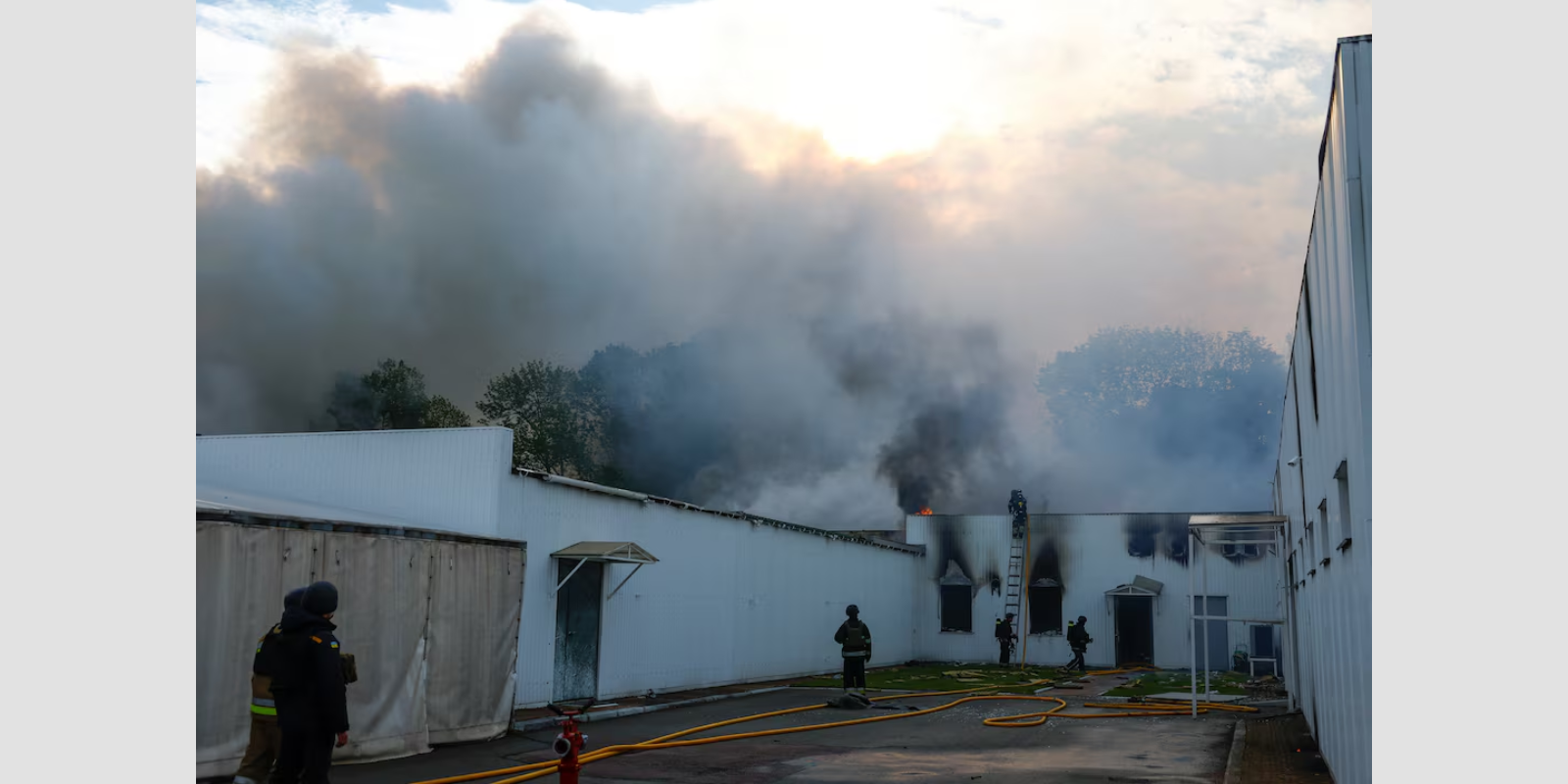
Most of Gaza has been reduced to rubble during Israel’s war with Hamas © Ebrahim Hajjaj/Reuters
In a social media post, the Gaza-based poet Nima Hasan said Hamas should agree this time: “It knows its adventure has come to an end. Killings continue in Gaza and the bombing has not stopped for a moment. Accepting now means the losses would be less than later.”
Diplomats say Hamas, which is proscribed as a terrorist group in the US and the EU and whose late leaders were sought for war crimes, has accepted it will never again govern Gaza, which it has controlled since 2007.
But until recently it made clear giving up its weapons was a red line, only to be contemplated during integration into the armed forces of an independent Palestinian state — something that Israel says it will never allow.
“It really is a moment of reckoning for Hamas,” said Amjad Iraqi, analyst at the International Crisis Group. “They know they’re heavily beat. At the same time, they have a lot of strategic concerns about what the Israelis will do, what the Americans will do and they are also trying to survive as a movement.”
Israeli officials say they have destroyed much of Hamas’s military capability and depleted the group’s weapons stockpiles. Thousands of its estimated 30,000 fighters have been killed, as has most of its senior military leadership, including Yahya Sinwar, the architect of the October 7 attack. From the prewar military leadership in Gaza, only Izz al-Din al-Haddad, commander of the group’s armed wing, remains alive.
Its political leadership abroad is busy negotiating long-standing tensions between Hamas’s military and political wings, which are coming to a head as the group reckons with its future survival. But it is not defeated.
“It’s not the same Hamas as on October 7; it’s much weaker,” said Michael Milshtein, a former Israeli intelligence officer who specialises in Palestinian affairs. “But it knows how to adapt and is still the most dominant force in Gaza, not just militarily but also in terms of governance.”

Hamas fighters at the site of the handing over of the bodies of four Israeli hostages in February © Saeed Jaras/Middle East Images/AFP/Getty Images
Hamas has retained some command and control as well as top-down decision-making, and has appointed new leaders, analysts say, regrouping in Gaza City over the past year. The depletion of its ranks has forced it to shift from military formations to guerrilla warfare tactics.
“The [Israeli] army keeps going back to certain towns, especially north, over and over again, saying it’s cleaned out Hamas, and then it turns out they have to go back again,” said Iraqi. “It’s clear that there is some fight there. It’s just not necessarily one that’s tilting the balance of power.”
Drawing on its history of armed resistance and its popularity among segments of Palestinian society, Hamas has also been able to continue recruiting thousands of young Gazans, driven by anger over Israel’s relentless assault. But their level of training is inferior to those who have been killed.
“There is high motivation for a lot of young Palestinians to take up arms,” said Iraqi. “Whether this is an effective fighting force is a different question.”
Arab and Muslim states that have pressed for a ceasefire throughout the war — including Qatar, Jordan, Egypt, Saudi Arabia, the United Arab Emirates and Turkey — have endorsed the Trump proposal.
Iran-backed Hamas first came to power in Gaza in 2006 elections and cemented control in the strip after ousting rival Fatah. But the ensuing decades were marred by an Israeli blockade, four wars with Israel and periodic assassinations of its senior military leaders. All the while, it was forced to adapt to the political realities of governance.
Hamas has always straddled its multiple identities as an armed resistance, political movement and a tyrannical militant group that ruled the strip with an iron fist.
Analysts say hardliners in the military wing have long bristled at compromises pushed by some in the political leadership, believing they always failed to deliver.
Accepting Trump’s plan would take Hamas down a different path. While it specifies that Hamas would agree not to have any role in the governance of Gaza “directly, indirectly or in any form”, there is deep scepticism in the strip that Hamas would cease to exist given its importance to the Palestinian social fabric. It also has a presence in the occupied West Bank, Lebanon and Jordan.
While many Gazans blame Hamas for provoking Israel’s ferocious retaliation, it remains the most popular faction among Palestinians in the enclave, analysts say, even if its support has dropped to 42 per cent, according to a May poll by the Palestinian Center for Policy and Survey Research.
“Hamas will try to survive. It won’t be eradicated as a political force,” said Palestinian historian Yezid Sayigh. “Hamas has a deep history as a political movement. There’s no reason for it to disappear — if you look at other Muslim Brotherhood movements, they all survived without armed wings.”
“But it’s trying to negotiate how it does that without becoming marginalised politically,” he added.
Trump has given Hamas only a handful of days to respond to the ceasefire plan.
Arab and Muslim states that have pressed for a ceasefire throughout the war — including Qatar, Jordan, Egypt, Saudi Arabia, the United Arab Emirates and Turkey — have endorsed the Trump proposal.
Bishara Bahbah, who has served as an unofficial negotiator in Doha on behalf of Trump’s special envoy Steve Witkoff, said on Tuesday that Hamas was seeking “clarifications, commitments and amendments” on several items of Trump’s plan.
Those included a timetable for an Israeli withdrawal from Gaza, guarantees on a permanent end to the war and a definition of disarmament, Bahbah told the Financial Times.
Mkhaimar Abusada, a political scientist at Al-Azhar University in Gaza now based in Cairo, said the consequences of rejection “will be devastating to Hamas and the Palestinians”.
One Arab diplomat put it bluntly: “There is huge pressure on Hamas to come to the table and agree to this plan, no matter how bad they think the terms are.
“Who knows what will happen if Hamas rejects something the Arabs have presented to them as the only way out? They could lose support and they know it.”
Additional reporting by Neri Zilber in Tel Aviv and Abigail Hauslohner in Washington